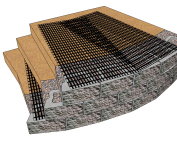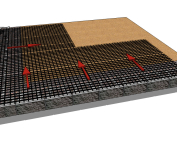
Are you looking to create a visually striking and unique set of stairs in a wall project? Look no further than CornerStone® 100 stairs. These stairs are designed with features, such as a hollow core and SecureLug, making the installation process simple.

This section provides step-by-step instructions for using CornerStone® 100 to construct stair details. After reading this blog post, you will learn how to:

  • prepare the base leveling pad

  • lay the first, second, and third courses

  • fill the cores with concrete or gravel

  • add stair treads

  • create risers

  • and more

This guide can help anyone create beautiful and practical stairs for any wall systems.

separator-fancy

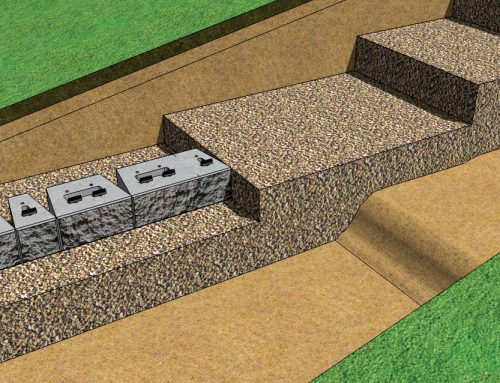
Step 1: Base Leveling Pad

  • When building steps, exercise the same care used in typical retaining wall design and construction.
  • Prepare the sub-base and base leveling pad by following Gravity retaining wall CornerStone® Installation Steps 1 to 9.
  • Build each step in sequence with each course of the regular retaining wall units for best results of wall to step interlock.
cornerstone-100-stairs-step1

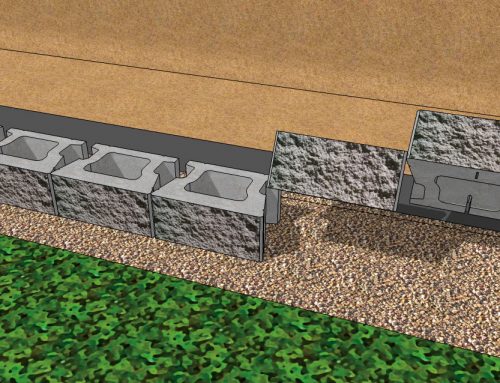
Step 2: Lay the First Course

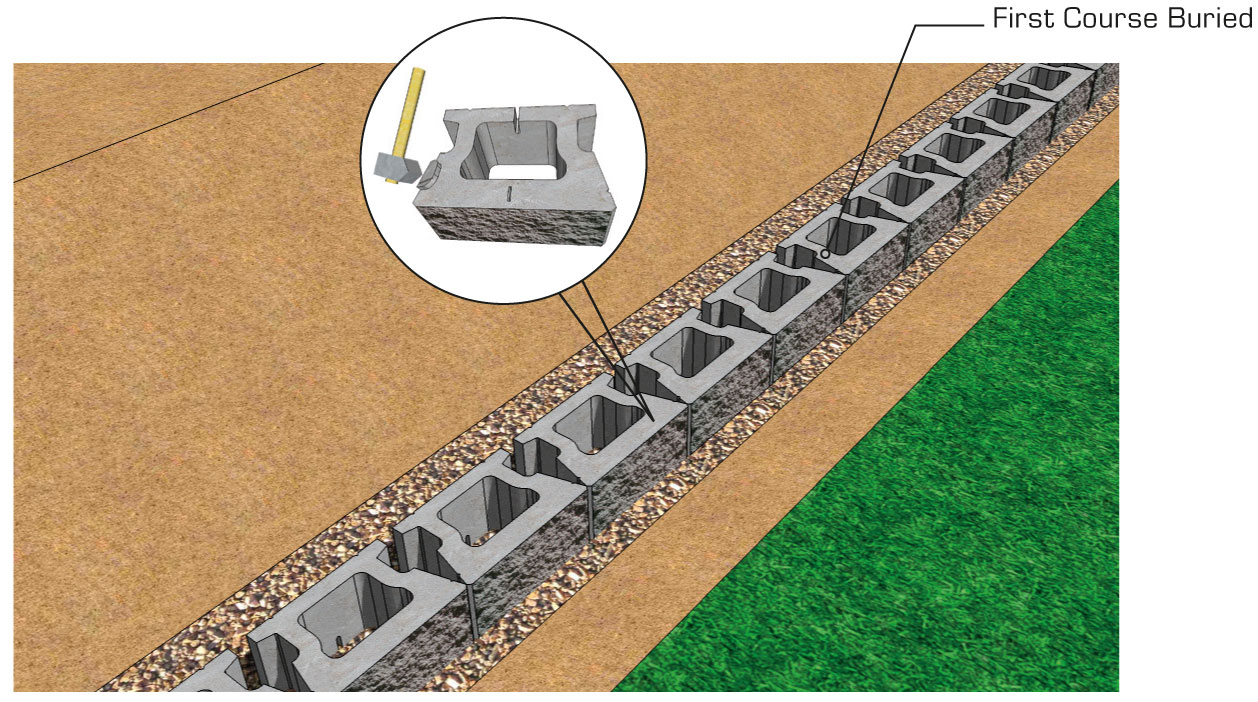
  • CornerStone® first base units will have the SecureLugs removed before placing on the leveling pad.
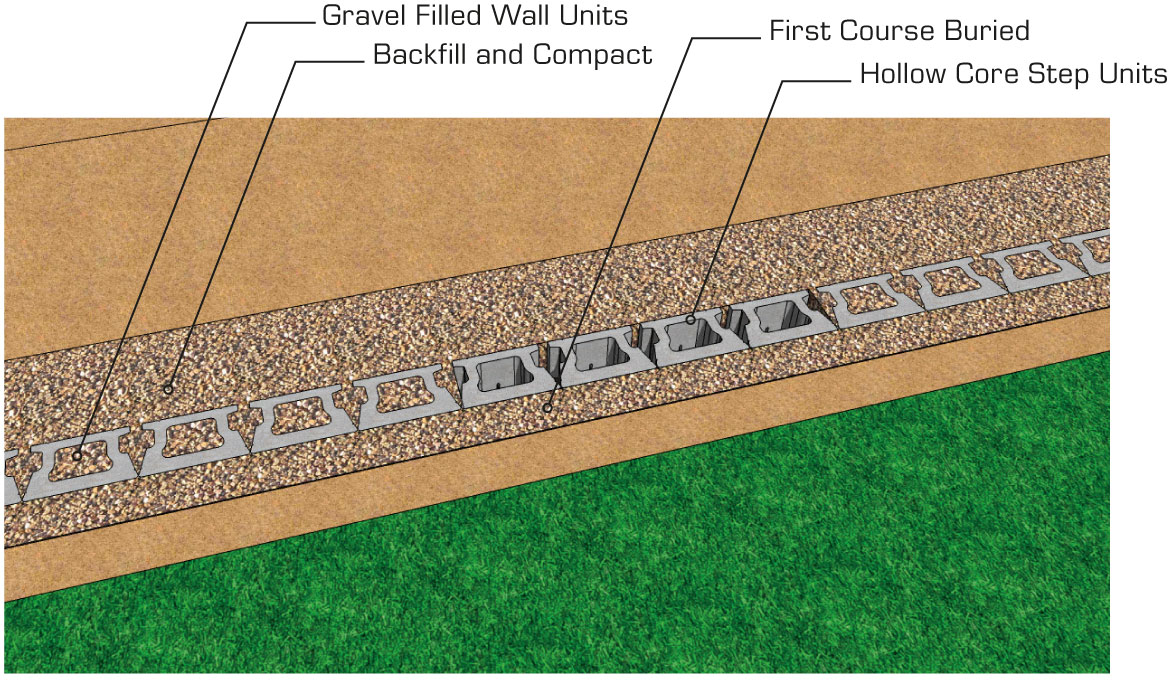
  • The first course of step units will be completely buried.
  • Backfill behind the first course units with gravel, then compact and level flush to the top of the first course.
  • Do not fill the step units’ hollow cores with gravel if you plan to use concrete.
cornerstone-100-stairs-step2

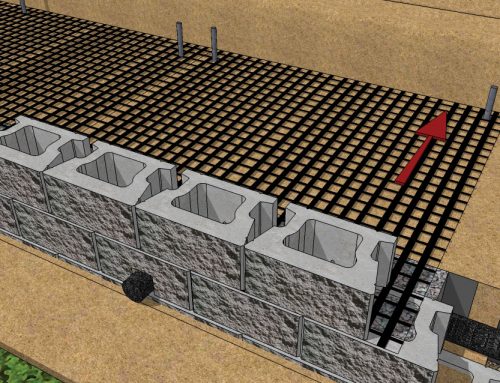
Step 3: Lay the Second Course

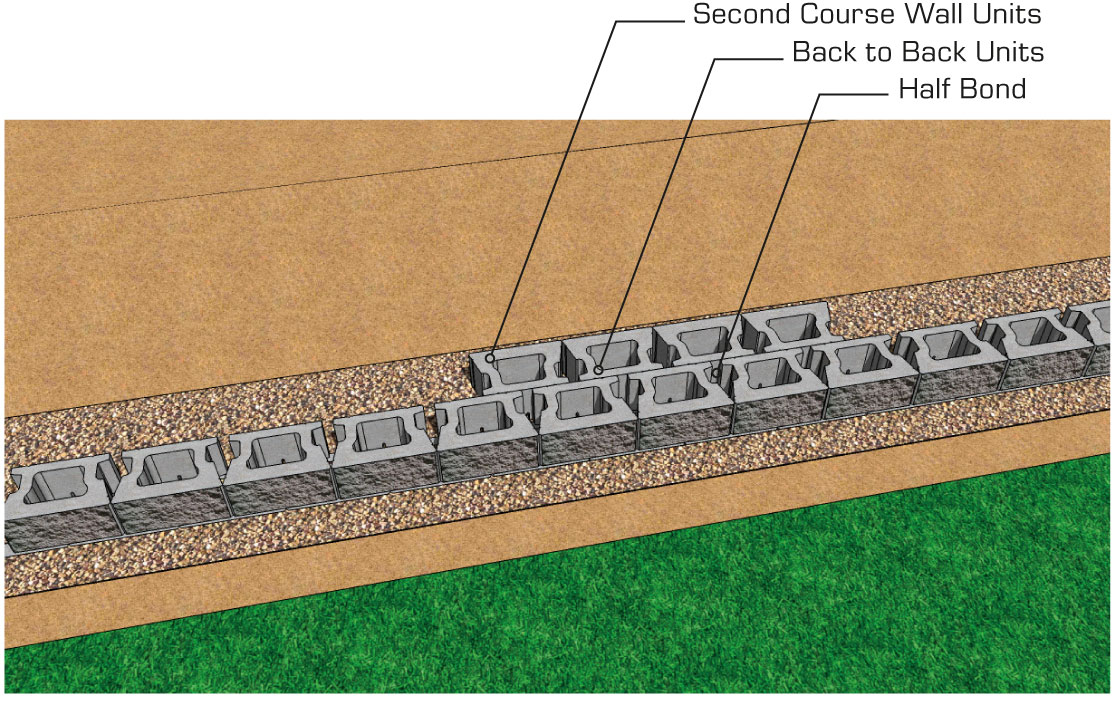
  • Place the second course of units on top of the base units.
  • Place a second row of units back-to-back behind the second course of units on
    half bond.
  • Backfill behind the second course of units with gravel, then compact and level flush to
    the top of the second course.
  • Do not fill the step units’ hollow cores with gravel if you plan to use concrete.
cornerstone-100-stairs-step3

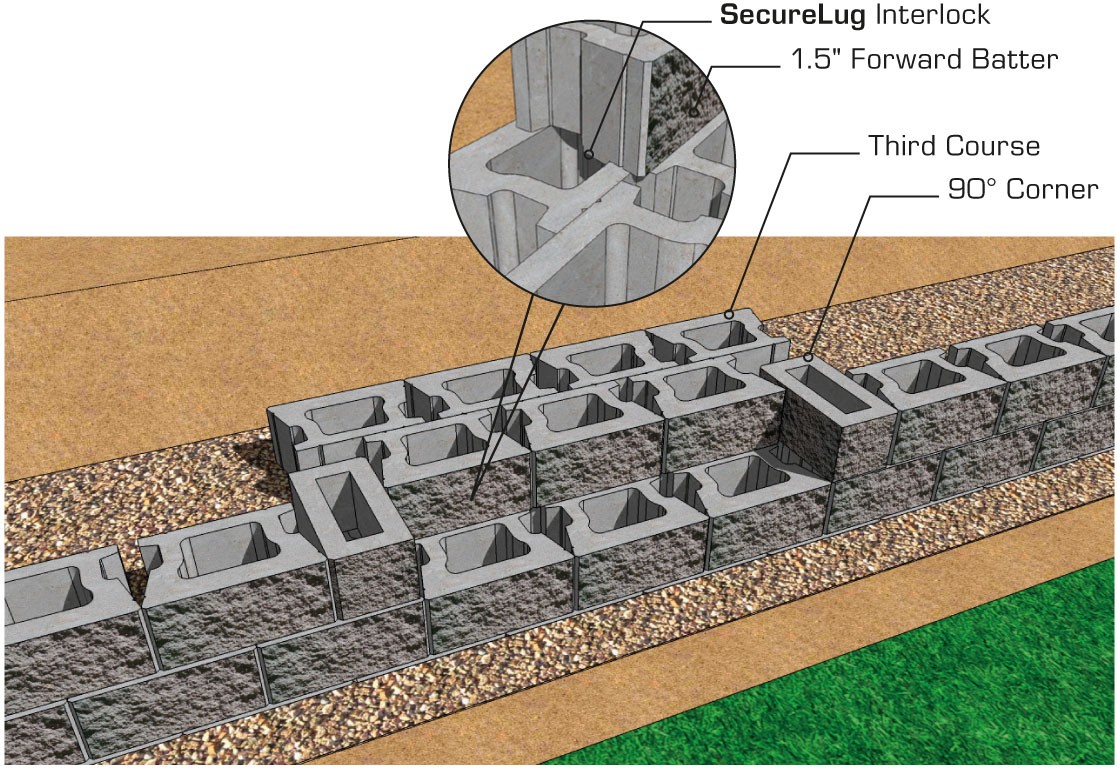
Step 4: Lay the Third Course

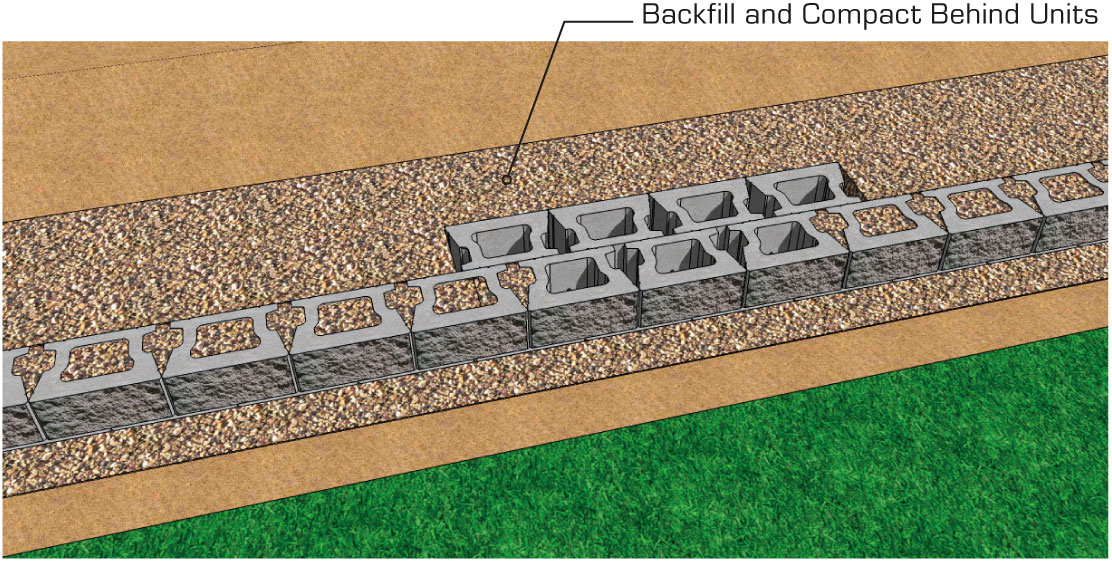
  • Place the third course of units on the lower backward facing units with the SecureLugs placed into the 2 hollow cores of the lower units on half bond.
  • Pull the units forward to lock the SecureLugs into the lower backward units.
  • The third course units will be in a forward batter approximately 1.5 inch leaving 10.5 inches exposed on the front first step.
  • Place a second row of units back to back behind the third course of units on half bond.
cornerstone-100-stairs-step4

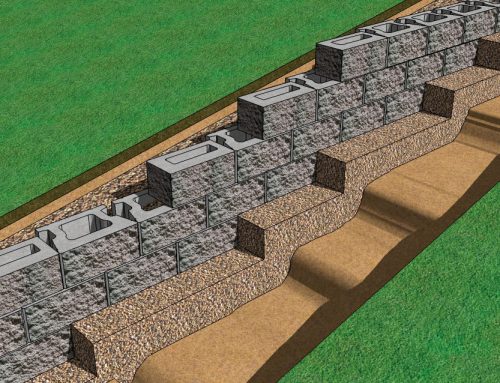
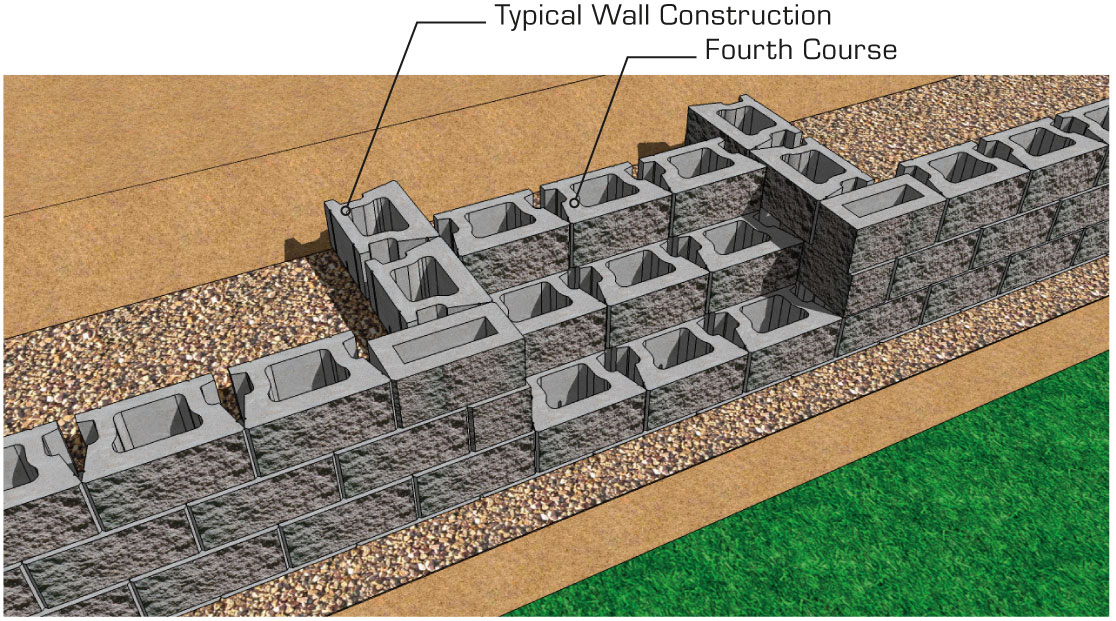
Step 5: Continue Installation

  • Continue to install each course of step units following the same steps as above.
  • The top and final step does not need backward units.
cornerstone-100-stairs-step5a

cornerstone-100-stairs-step5b

Step 6: Concrete Core Steps

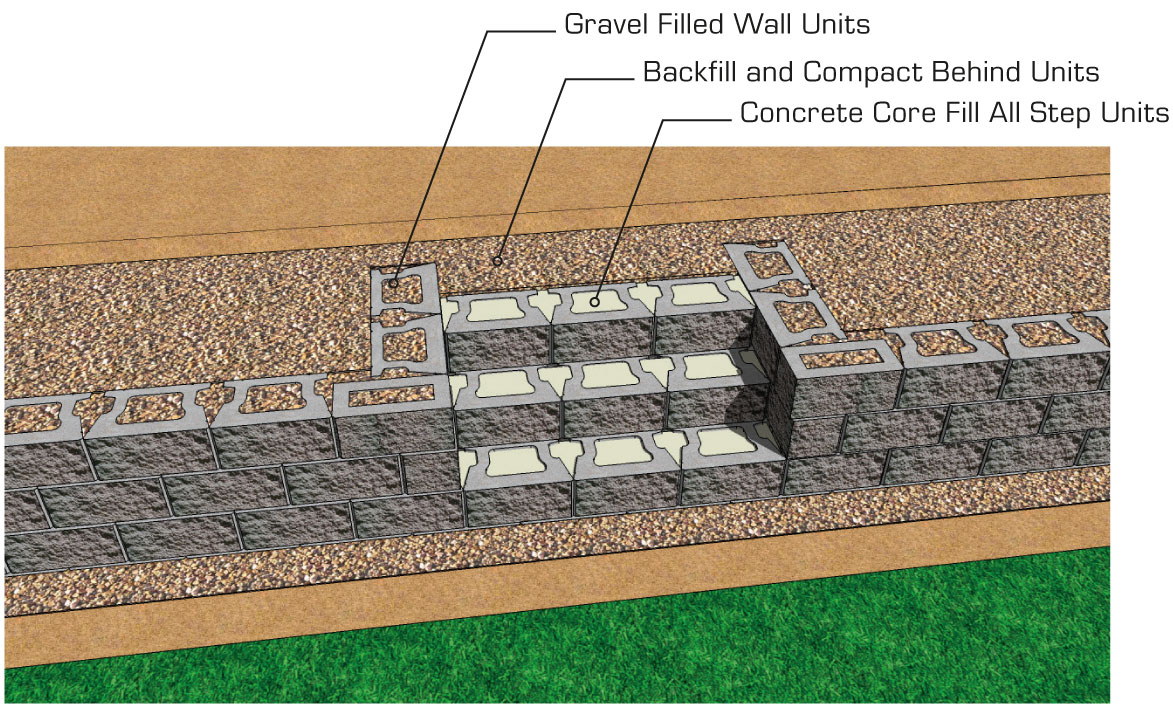
  • Concrete filling the cores of all the step units will provide for greater stair stability.
  • Flush the concrete/gravel core infill to the top of the units.
  • Use a steel bar to hand-vibrate the cores to insure proper filling.
  • Option: Unit cores can be filled with gravel but must be well compacted.
cornerstone-100-stairs-step6a cornerstone-100-stairs-step6b

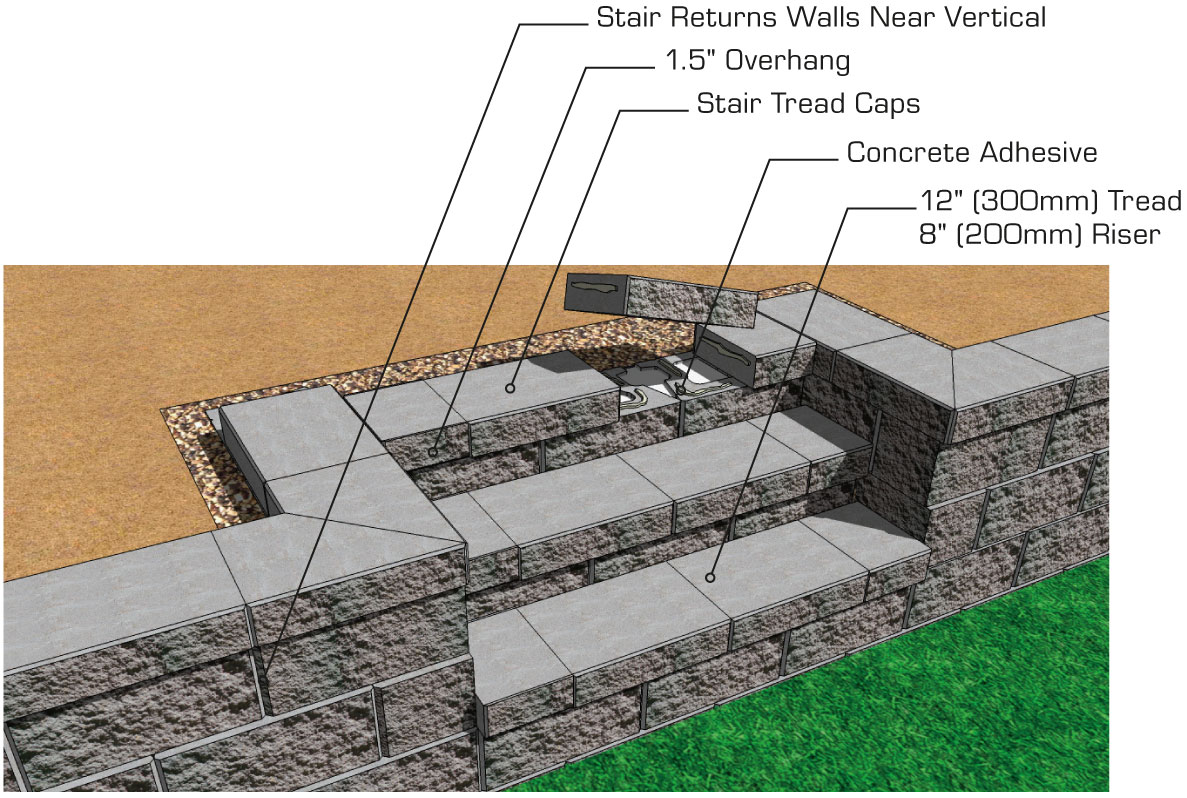
Step 7: Stair Threads

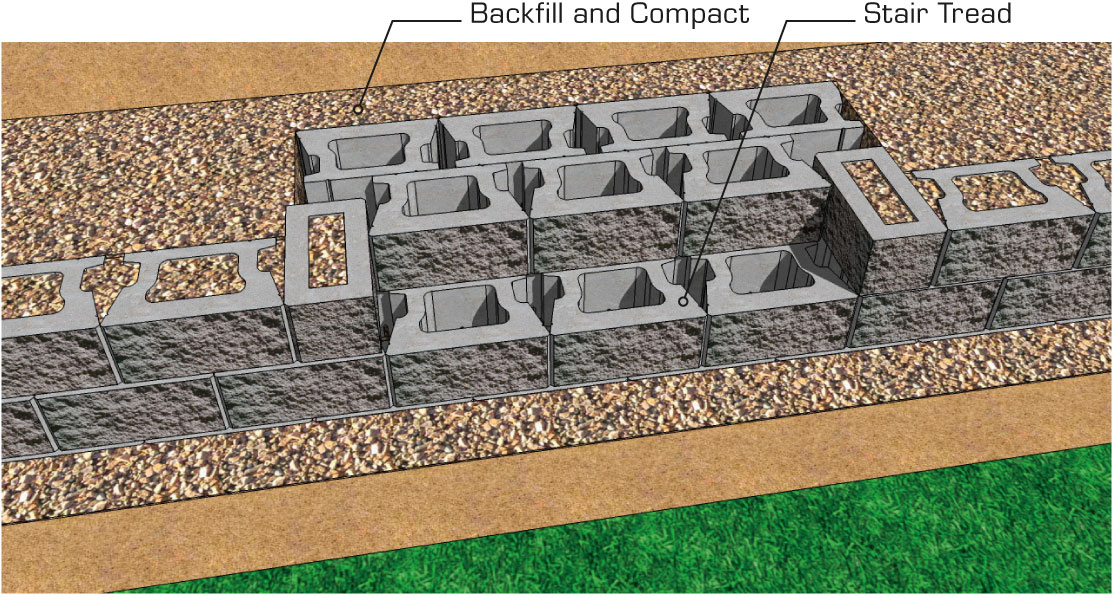
  • CornerStone® 12-inch deep cap units can be used as a stair tread.
  • Option: Pavers, Patio Slabs, or Natural Stone can also be used as a stair tread.
cornerstone-100-stairs-step7

Step 8: 8″ Riser Cross Section

  • The 12-inch cap will overhang the step units by approximately 1.5 inch on each step.
  • The riser will be a full 8 inches using the above installation.
  • Properly secure the cap units using a concrete adhesive.
  • Make sure all units are free of dirt and stones before installing.
  • Place a bead of adhesive between each joint of the caps.

cornerstone-100-stairs-step8

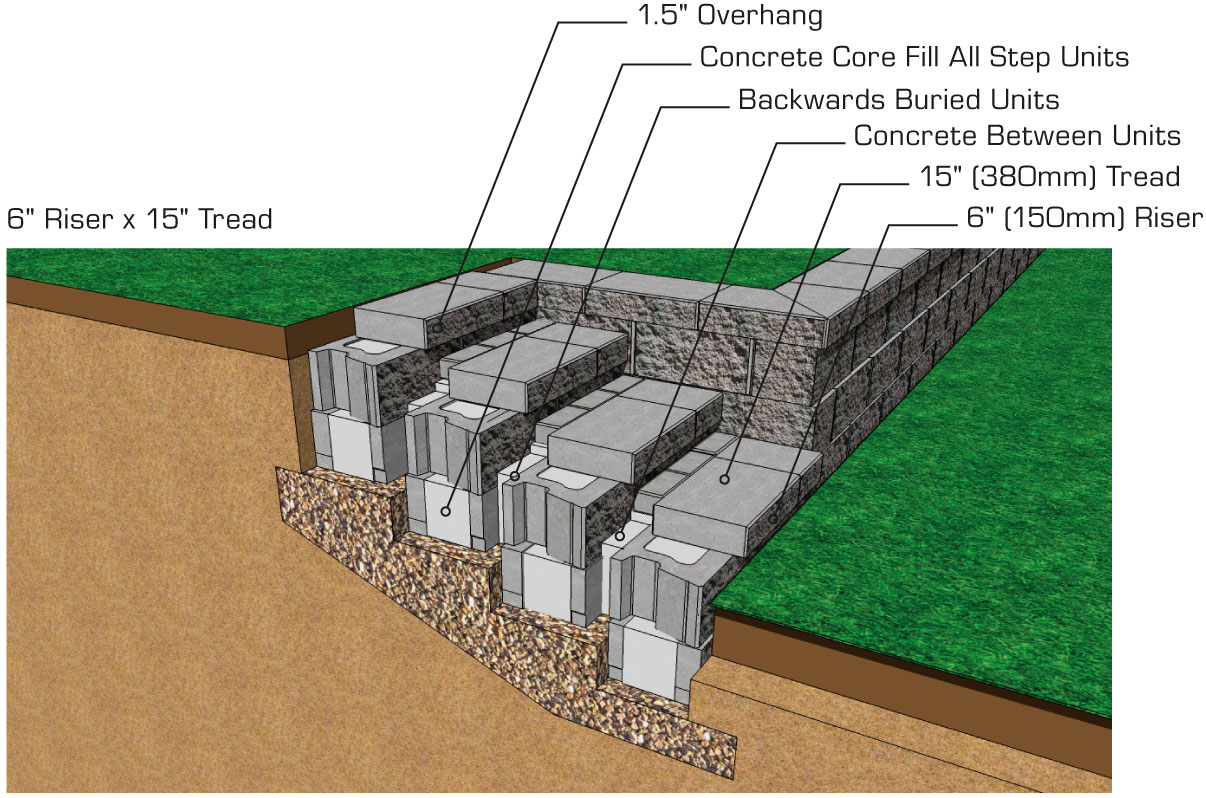
Step 9: Lower Step Risers

  • Lower risers can be made, such as 6″ or 7″, by lowering the buried units 1 to 2 inches below the top of the backward buried unit.
  • Larger treads can be created by moving the buried units back off the forward step course 3 to 4 inches to create a 15 to 16 inch tread.
  • A variety of riser heights and tread lengths can be created to suit your project.
cornerstone-100-stairs-step9

Wrapping Up

Constructing a striking and functional set of stairs for your wall project has never been easier with CornerStone® 100 stairs. With the instructions above, you can spruce up your landscape and create a practical solution for accessing higher levels.

CornerStone® 100 stairs offer a wide range of options for customizing your stair treads. These include concrete caps, pavers, patio slabs, and natural stone.

The ability to customize the stair treads allows you to create a personalized look that matches your style and preferences. Additionally, using high-quality materials for the treads ensures that your stairs will be durable.

Using CornerStone® 100 stairs has several other advantages:

  • These stairs are designed with a hollow core, making them lightweight and easy to handle during installation.

  • The SecureLug feature ensures a secure interlocking connection between the step units and the wall system.

  • The use of concrete or gravel in the core of the step units provides added stability and durability.

By integrating these stairs into your wall systems, you can achieve a seamless and attractive design that will endure over time. Plus, it can potentially add value to your home.

More CornerStone 100 Installation
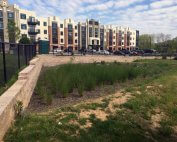
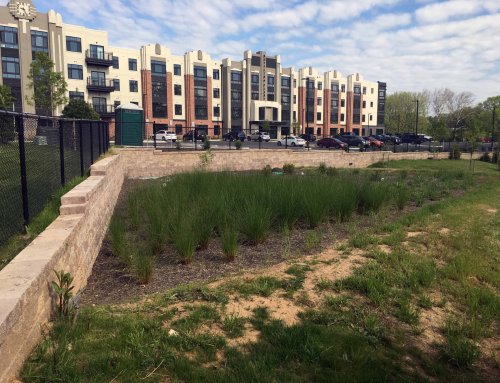
  • CornerStone Bioretention Retaining Wall - Frederick, Maryland

Bioretention Retaining Walls at Bottling Plant Apartments

February 22nd, 2021|0 Comments

Location Frederick, MD, USA Total CornerStone Retaining Wall Blocks 6,288 sq. ft. (584 sq. m.) CornerStone Manufacturer York Building Products Wall Engineer Scott A. Miller Consulting Engineer Civil Engineer Harris-Smariga Architect GTM Architects Installers Botanica Enterprises Completed Year 2019 CornerStone Bioretention Retaining Walls Support Iconic Property The Bottling Plant Apartments' Iconic Property Founded in 1748 and located an hour’s drive from the bustling metro areas of Washington, DC, and Baltimore, MD, is the revered city of Frederick, MD. Steeped in American history, the city’s downtown core has seen its share of development in recent years. Yet it has always maintained the same captivating atmosphere of its ‘clustered spires’ skyline and Historic District. Beyond >More

  • cornerstone 100 gravity retaining wall

CornerStone 100 Gravity Retaining Wall Installation

January 7th, 2016|0 Comments

Gravity (SRW) Cornerstone retaining wall systems are structures lower in height that use the CornerStone® unit weight combined with gravel core infill to resist earth pressures behind and on top of the wall. The 5/8"/unit (4.5 degree or 1"/vertical foot) batter or setback of the CornerStone® retaining wall along with proper soil conditions below and behind the wall provide the stability of the structure. Below is a step by step for CornerStone 100 Gravity Retaining Wall Installation. For walls 4.0ft (1.2m) and taller a qualified engineer should be consulted. CornerStone 100 Gravity Retaining Wall Installation This guide can be used for CornerStone 100, MiraStone, FrogStone, Panomur Step 1: Planning Your Retaining Wall Project Call before you dig & contact local authorities or city planning to ensure you follow proper guidlines Mark the bottom and top of the retaining wall excavation location with spray paint or stakes Establish proper elevation >More

  • cornerstone 100 geogrid retaining wall

CornerStone 100 Geogrid Wall

January 7th, 2016|0 Comments

Creating a CornerStone® reinforced retaining wall system, involves the use of geogrids for reinforcement. Cornerstone geogrid retaining walls 3.5ft (1.07m) and taller will automatically have active pressures because of their height. Retaining walls smaller than 3.5ft (1.07m) may also require geogrid reinforcement depending on other related factors. Parking lots, roadways, or positive slopes above walls for example, require the use of reinforcement to help resist the increased pressure behind the wall. Geogrid used with the appropriate lengths, layers, and compacted backfill materials will resist these active forces above and behind the wall. For CornerStone 100 geogrid reinforced retaining wall  3.5ft (1.07m) and taller a qualified engineer should be consulted. Step 1: Planning Your Retaining Wall Excavate and prepare Sub Base Leveling Trench 6" below first course Leveling Pad Trench is approximately 2.5' to 3' wide Normal wall Burial Depth or Embedment Depth is 6" to 12" or one block >More

  • cornerstone 100 base elevation

CornerStone Retaining Wall Block Base Elevation Change

January 7th, 2016|0 Comments

CornerStone Retaining Wall Block Installation For Base Elevation Change are often required and can be problematic if not planned properly. Correct construction and professional completion of these wall details greatly enhances the visual appeal of the finished project and avoids the time and costs associated with improper installation. This document provides illustrated step-by-step instructions for integrating base elevation changes. Step 1: Retaining Wall Base Elevation Change The top of the retaining wall installed base unit will be used to establish the step up gravel leveling pad elevation Make sure to backfill and compact the gravel in and around the last unit of the first course Finished grade of the leveling pad should be an 1/8" to 1/4" above top of first course units to allow for a small amount of settlement Repeat the above screeding steps on the second elevation gravel leveling pad Place the first unit on the second course at a half bond on >More

  • cornerstone 100 curved retaining wall

Retaining Wall Curve CornerStone 100

January 7th, 2016|0 Comments

Retaining Wall Curve details are often required for specific sites and can be specified by designers and engineers. Correct construction and professional completion of these wall details greatly enhances the visual appeal of the finished project and avoids the time and costs associated with improper installation. This document provides illustrated step-by-step instructions for building convex and concave curves. Step 1: Retaining Wall Curve Convex First Course If possible, start building a retaining wall curve from the center and work left and right through the curve Use PVC Flex Pipes to create smooth and accurate Convex curves Use the back of the unit for alignment Remove one or both CornerStone® wings when building a Convex curve Build each course of units by starting at the same place and the same bond as the last course Convex retaining wall curve have a slight increase in batter or setback to the standard 5/8" The taller the wall the larger >More

  • cornerstone 100 retaining wall corners

Retaining Wall Corner Installation

January 7th, 2016|0 Comments

Retaining wall corner installation details are often required for specific sites and can be specified by designers and engineers. Correct construction and professional completion of these wall details greatly enhances the visual appeal of the finished project and avoids the time and costs associated with improper installation. This document provides illustrated step-by-step instructions for building inside and outside corners. CORNERSTONE 100  RETAINING WALL CORNER INSTALLATION This guide can be used for CornerStone 100, MiraStone, FrogStone, Panomur Retaining Wall Corner Installation | Outside Corner Use a 90° Retaining wall Corner unit to build an outside corner. Solid and hollow core may be used for installation process. Place the first 90° Corner unit on the base leveling pad to start the outside corner Place a CornerStone® unit on either side against the 90° Corner unit Continue to lay the CornerStone® base course on either side of the corner until first course is completed Flip and turn the second course >More

  • cornerstone 100 stone pillars

CornerStone 100 Pillars

January 7th, 2016|0 Comments

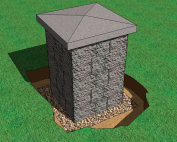
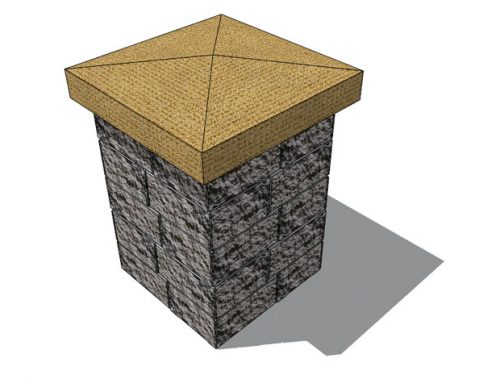
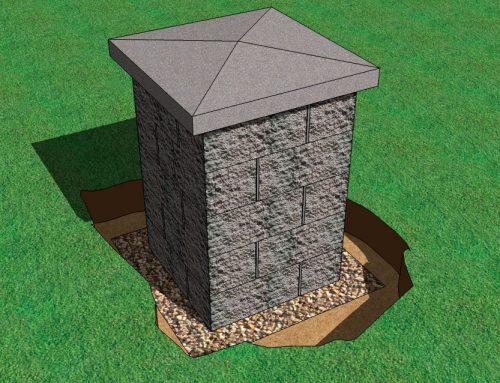
Pillars add a finishing touch of elegance to any CornerStone® wall project. They can be used to create distinguished entranceways to any residence or business and the unit’s hollow cores greatly simplify the placement of lighting in the pillars. This section provides simple instructions for the creation of a 27" pillar. Step 1: Levelling Pad Excavate and prepare your Sub Base Leveling Pad Install leveling pad of well graded gravel (also known as road base aggregates) a minimum of 8" (200 mm) thick and 40" (1000 mm) square. Compact to 95% standard proctor density Install the first 4 corner units perpendicular and square to each other Ensure first base course is level and square to the center of the pad Bury the first course completely for stability Step 2: Second Course Place second course of the CornerStone® 90° Corner units directly on top of the first >More